01An editor for long drafts

A second reader for the long draft.

Umber reads the whole draft, then leaves short notes in the margin where a line could move or a passage could go. It never writes into your sentences.

Bright morning sun through a window, split by the mullion’s shadow, on a limewashed wall above a linen table with a stack of loose pages and a pencil.

Fig. 1 The draft view. Sample essay.

UmberA garden with four wallsDraft 3

Reading ¶ 4 of 11

The garden had four walls and no roof, which my mother said was the right proportion for a room. She came every afternoon that summer and sat on the same bench.

I used to think she came for the quiet. I think now she came for the walls, because the walls meant the quiet had edges, and she could tell where it stopped.
The tree in the middle was older than the building. Nobody planted it where it stands. They built the cloister around it and left the gravel to find its own level.

What she wanted, I think, was a quiet she could see the end of.

Paragraphs
11
Notes open
3
Words Umber wrote in your draft
0

Saved 09:14Sample essay

Presses and workshops that read with Umber. Sample marks.

  • Lowmoor Press
  • the Ashcombe Review
  • Merrin & Scoe
  • Quennow
  • Sedgemarl Letters
  • Sallow
  • North Tern

02How it reads

Five rules it reads by.

Umber reads a draft the way a good editor does, start to finish, before it says anything. Then it keeps to five rules, and the workspace shows each one at work.

Sample drafts

UmberMaren’s desk

All notes savedMargin paused

MT

A garden with four walls

EssayDraft 31,840 wordsReading ¶ 4 of 11Read ¶ 11 of 11Paused at ¶ 4

Margin paused. It won’t bring ¶ 4 up again.

The garden had four walls and no roof, which my mother said was the right proportion for a room. She came every afternoon that summer and sat on the same bench.

I used to think she came for the quiet. I think now she came for the walls, because the walls meant the quiet had edges, and she could tell where it stopped.QuestionSee ¶ 11Wording

Offered in your phrasing

The walls were how she knew where the quiet stopped.

From The Salt Year, chapter 3. Not placed in your draft.

Why this wording

It keeps your words for the walls and the quiet, and drops the “because” that slows ¶ 4 down.

The tree in the middle was older than the building. Nobody planted it where it stands. They built the cloister around it and left the gravel to find its own level.

Cut two?

What she wanted, I think, was a quiet she could see the end of.

A quiet with walls round it is a different thing from silence. You can leave it by a door.

Maybe that is all a room is: a quiet you are allowed to walk out of.

Your draft

0 words

written into it by Umber, ever

Before any cut

Cut ¶ 7 and ¶ 8?

Read first

11 of 11 

1,840 words in 3 min 40 s, before note one

Margin

Paused at ¶ 4

Nothing is read until you resume.

Phrasing learned from

12 pieces

you marked finished. No drafts.

  1. Each note sits beside the line it is about. Your paragraph changes only when you change it.

    In the sheet A note beside ¶ 4, and the count of words it wrote into the draft: none.

  2. A suggested cut arrives as a question with its reason attached, in a line or two.

    In the sheet ¶ 6 to 8 bracketed, and a question where a cut would be.

  3. A note on paragraph four already knows how paragraph eleven ends.

    In the sheet Every paragraph read, and ¶ 4 linked to the ending in ¶ 11.

  4. Pause the margin and it stops reading. It will not bring the subject up again.

    In the sheet The margin paused, its notes held, the reply box closed.

  5. When it does suggest a sentence, it draws on pieces you have finished, and nothing else.

    In the sheet One sentence in your phrasing, kept in the margin until you place it.

Fig. 2 Maren’s desk, with sample drafts. The rule that is open sets what the sheet shows.

03Its marks

Four marks, and nothing else.

Everything Umber puts on your page is one of four proofreader’s marks with a short note beside it. The sentence under the mark is left as you wrote it.

She came every afternoon that summer and sat on the same bench.

¶ 3 From the sample essay. The note beside the caret asks which bench; the sentence stays as it was written.
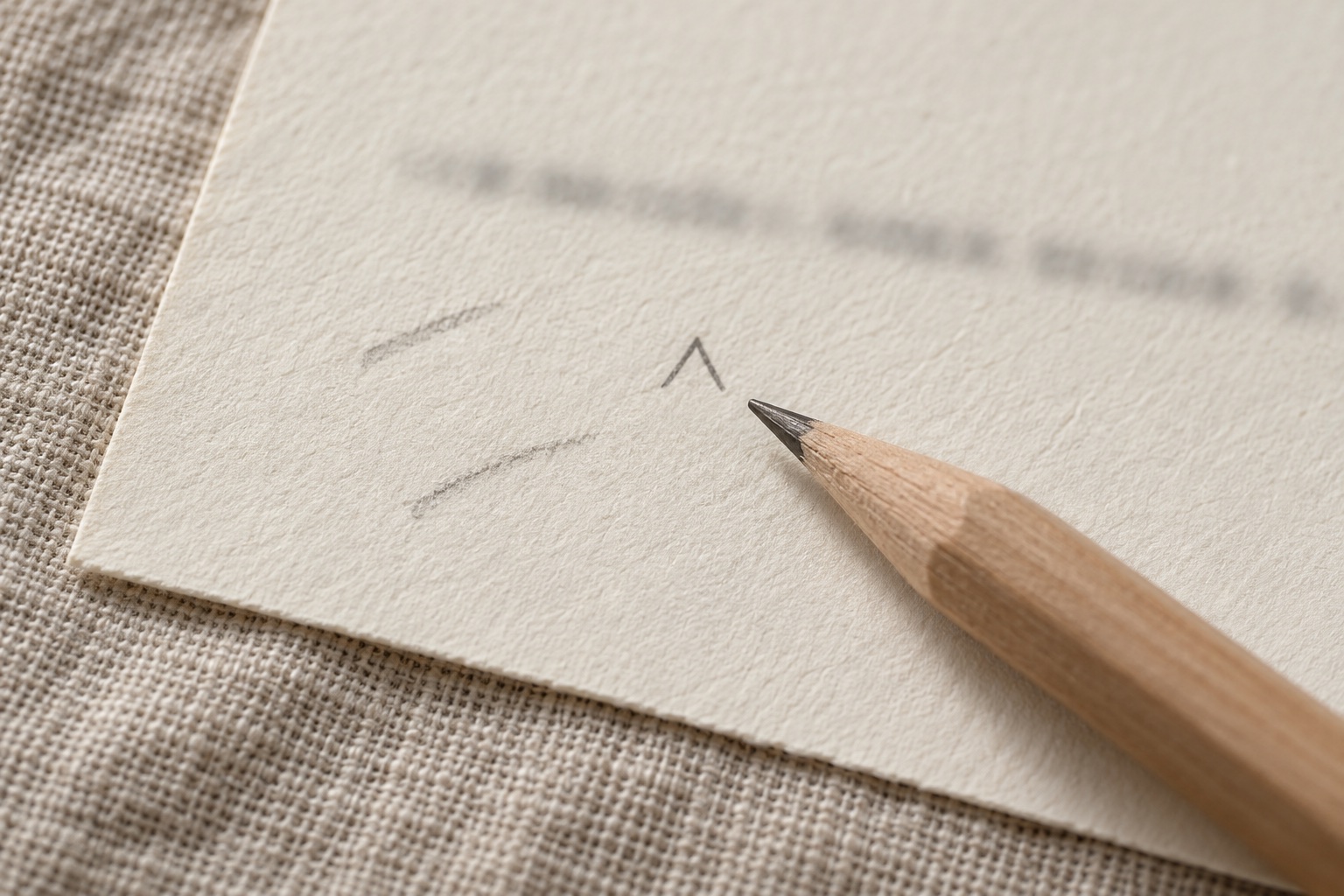
Macro of ivory card stock lying on linen: a pencilled caret and two short strokes under a soft, out-of-focus printed line, with a pencil tip resting beside them.
Pl. 1 A caret in pencil, the oldest of the four marks. Umber draws the same one and nothing heavier.
  1. 3aCaret

    Something is missing here.

  2. 3bPilcrow

    A new paragraph starts here.

  3. 3cBracket

    This passage could move.

  4. 3dStet

    Leave it as it was.

04Overnight

Leave it overnight.

Try it on a draft

Close the laptop with a draft open. By morning Umber has read it start to finish and left a reading on your desk, with the paragraphs where it slowed and the questions worth your next hour.

Sample reading

A draft fanned across a linen table at night under one small lamp, folded reading glasses on the pages and a stoneware cup beside them.

UmberMorning reading

Ready 06:02

A garden with four wallsEssay · Draft 3 · left open at 23:40

Words
1,840
Paragraphs
11
Reading time
8 min
Open questions
3

In one sentence

An essay about your mother’s summer in a walled garden, and about a quiet that has edges.

Where it slows Marked

Paragraphs 6 to 8 make the same point three times.

Three questions

  1. What does she do on the bench? We never see her hands.
  2. Is the tree your mother, or is the garden?
  3. Paragraph four reads like an ending. Is it?

Read overnight in 1 min 12 s. Nothing in your draft changed.

05In use

A month in the margin.

Umber offers a note and leaves the decision with you. These are the choices writers made over one sample month.

Invented month

Notes taken as offered
58 in 100
Sample figure, from an invented month of 4,120 notes.
Left exactly as written
31 in 100
Same sample month. The writer read the note and kept the line.
Answered with a question
11 in 100
Same sample month. The writer replied to the note in the margin.
Words Umber wrote into a draft
0
Set by design. Umber has no way to write into your draft.

Maren Tully, essayist. Sample quote. Illustrative portrait.

Illustrative portrait: a woman in her thirties with dark hair in a linen shirt, reading a few printed pages beside a limewashed wall.

“It asked me one question about paragraph six. I spent the afternoon answering it, and the essay came out better and still sounds like me.”

Aurel Denning, writing a history of his town. Sample quote. Illustrative portrait.

“I left the whole manuscript with it on a Friday night. By Monday it had fourteen questions for me, and it hadn’t changed a word.”

Illustrative portrait: a grey-haired man in his sixties in a grey shirt, reading printed pages beside the same limewashed wall.

From the presses in the colophon. Sample quotes.

  1. “Every long essay that comes in goes to Umber before an editor opens it. Our first meeting now starts with its questions.”

    Ines Aldana, managing editor, Lowmoor Press

  2. “We ran a year of the quarterly through it. It asked about eleven sentences in forty essays and left all eleven as they were.”

    Tomas Reyne, editor, the Ashcombe Review

  3. “Students hand in a draft on Friday and bring Umber’s questions to the workshop on Monday. The talk is better for it.”

    Harriet Oyelaran, workshop lead, Sedgemarl Letters

01 / 03

06Privacy

It reads the draft and keeps nothing.

Umber reads a draft to write notes about it, and for nothing else. It keeps no copy for itself, and your drafts stay in your account until you delete them.

It learns your phrasing only from pieces you mark as finished. That sample is visible to you alone, and it is gone the moment you ask.

  • No training

    No draft trains a model on any plan, ours or anyone else’s.

  • Your phrasing, on request

    Learned from finished pieces you choose, and off with one switch.

  • Deleted in one step

    One button removes every draft, note and phrasing sample in your account.

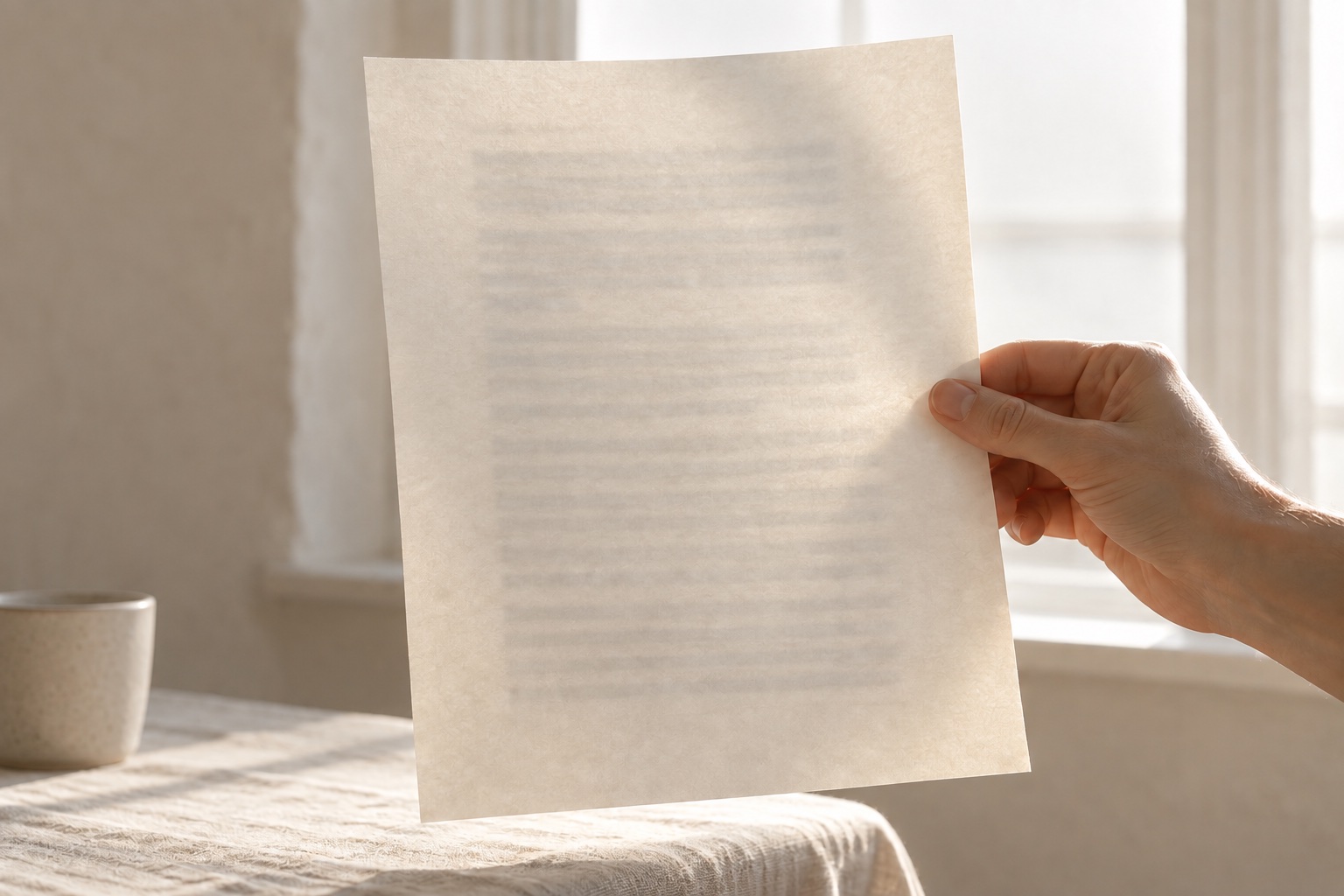
A single printed page held up to a bright window by one hand at its right edge, its lines showing through as soft grey marks, a linen table and a stoneware cup soft at lower left.
Pl. 2 Read against the light, then handed back.

UmberPrivacy and phrasing

Sample account
  • Learn my phrasing from finished pieces

    12 pieces, 31,400 words. Only you can see them.

  • Offer wording that sounds like me

    A note may include one sentence in your phrasing, marked as a suggestion.

  • Use my drafts to train models

    Off on every account. There is no setting for it.

    Locked
  • Delete everything in your account

    Drafts, notes and phrasing samples.

Finished pieces
12
Readings this month
14
Used for training
0

07Plans

Start free. Pay when the drafts get long.

Every Umber plan reads the whole draft before its first note. Writers pay by the month or the year, and presses pay by the seat.

UmberPrices in USD

Save 25%

What each plan includes

Reader

Free

No card needed

For trying Umber on shorter pieces.

Start free
Drafts a month
3
Length of a draft
5,000 words
Notes in the margin
Included
Overnight readings
Not included
Wording in your own phrasing
Not included
Shared desk for editors
Not included
Drafts used to train models
Never

Writer

$12

a month, billed monthly

For one writer working on a long draft.

Choose Writer
Drafts a month
Any number
Length of a draft
Any length
Notes in the margin
Included
Overnight readings
Included
Wording in your own phrasing
Included
Shared desk for editors
Not included
Drafts used to train models
Never

Press

$20

a seat a month, billed monthly

For presses and writing groups of three or more.

Choose Press
Drafts a month
Any number
Length of a draft
Any length
Notes in the margin
Included
Overnight readings
Included
Wording in your own phrasing
Included
Shared desk for editors
Included
Drafts used to train models
Never

On every plan: notes in the margin, and no draft ever used to train a model.

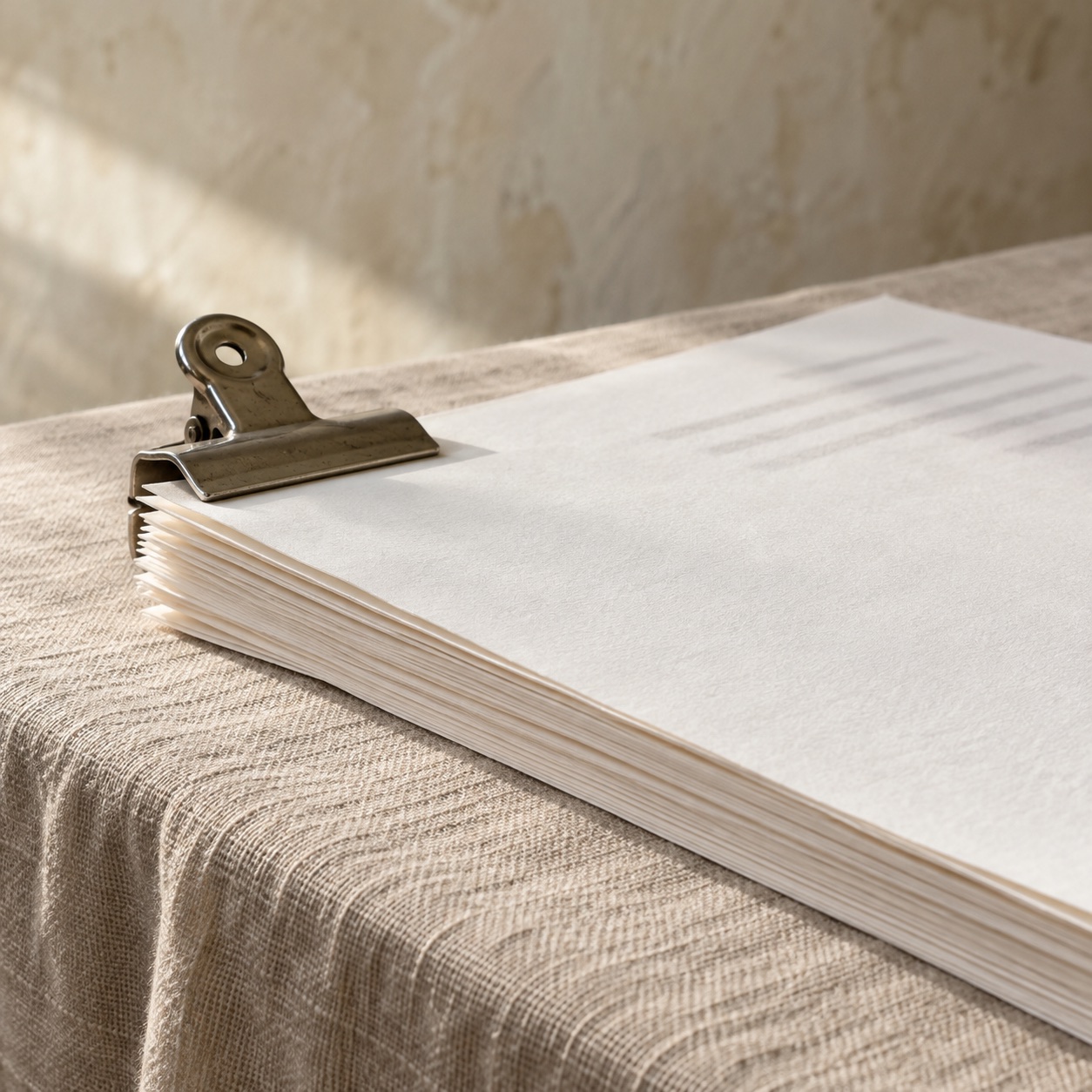
A thick manuscript held by one steel bulldog clip on the edge of a linen-covered table in raking daylight.
Pl. 3 A whole manuscript, one clip. Umber reads to the last page before it makes its first mark.
  • Cancel from your account page, and every note stays readable.
  • Export any draft with its notes as a file, on any plan.
  • Presses can pay by invoice, one bill for every seat.
The same limewashed wall and linen table at the end of the day, a wide amber streak of low sun across the lower wall and the stack of pages.

08Start

Bring Umber the draft you’re putting off.

Paste in a chapter or the whole manuscript. It reads to the last page before it writes its first note in the margin.

Start a draft
  • Reader is free, and it needs no card.
  • Writer and Press are refunded in full within thirty days.
  • No draft trains a model, on any plan.

“It read the whole book before it said a word, and the first thing it said was right.”

Odile Brannock, novelist, on the third draft of her second book. Sample quote.